The used car industry in the United States is more competitive than ever — and the numbers prove it. The U.S. used car market is valued at approximately $871 billion in 2026, projected to reach $980 billion by 2031 at a CAGR of 2.41%. With roughly 151,000 used car dealer businesses operating across the country, generating $151.9 billion in dealer revenue, the margin between dealerships that scale and those that stagnate often comes down to one factor: software.
Modern buyers now expect fast communication, transparent pricing, online financing options, and a smooth digital experience before they ever visit a dealership. According to Cox Automotive's Car Buyer Journey Study, 63% of buyers prefer an omnichannel purchasing experience that combines online research with in-store steps — while just 7% complete their purchase entirely online. Meeting buyers across both channels is no longer optional for competitive dealerships.
For used car dealers, managing inventory, leads, customer communication, financing, and marketing manually is no longer sustainable in this environment.
According to Cox Automotive's Car Buyer Journey Study, most vehicle buyers now complete a significant portion of their research online before contacting a dealership. The study also found that buyers who used AI-powered shopping tools reported higher satisfaction levels during the buying process.
The automotive retail industry is shifting rapidly toward automation, AI-driven communication, and integrated dealership systems. Dealerships that respond faster to leads, manage inventory efficiently, and automate repetitive tasks are gaining a measurable advantage in the U.S. market.
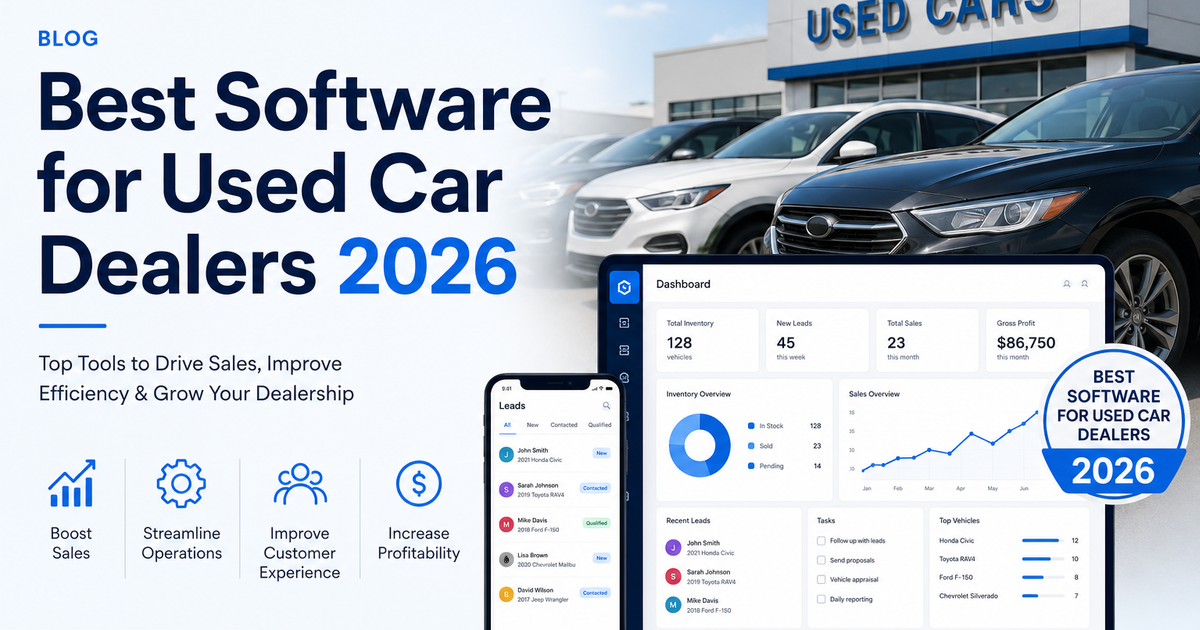
This guide covers the best software for used car dealers in 2026, including inventory management systems, dealership management software, CRM platforms, accounting tools, and AI-powered automotive solutions.
Why Used Car Dealerships Need Software in 2026
Manual Dealership Operations Slow Growth
Many independent used car dealerships still manage inventory and customer records manually using spreadsheets or disconnected systems. While this may work for very small operations, it creates serious limitations as dealerships grow.
Common problems include:
- Inventory confusion and duplicate listings
- Missed customer follow-ups
- Slow paperwork processing
- Inconsistent pricing updates
- Poor visibility into sales performance
- Accounting errors and reporting issues
Without connected systems, dealerships waste time switching between multiple platforms while employees manually update vehicle data, customer information, and financing details.
In today's market, slow operations directly impact profitability — and the scale of that impact is significant. Used-vehicle loan rates climbed above 16% in late 2025, compressing margins across the board. Organized dealer groups are expanding at a 7.41% CAGR, while independent lots operating without efficient systems are increasingly squeezed by thinner margins and higher acquisition costs.
For more on the operational cost of skipping this step, see why every used car dealer needs inventory management software.
Buyers Expect Faster Digital Experiences
Modern car buyers expect dealerships to respond quickly and provide digital convenience throughout the buying journey.
Customers now expect:
- Instant responses to inquiries
- Online financing applications
- Vehicle history transparency
- Text and Facebook communication
- Digital appointment scheduling
- Faster approval processes
The response speed stakes are high: dealerships that respond to a lead within five minutes are dramatically more likely to qualify that lead than those that wait even 30 minutes. Dealerships that cannot respond quickly lose leads to competitors within minutes — buyers today contact multiple dealerships simultaneously and move on fast.
According to Cox Automotive, buyers who experienced efficient digital retailing reported significantly higher satisfaction rates. The study also found that 48% of buyers want to apply for credit online, but only 33% actually complete that step — a meaningful behavior gap that dealerships with friction-free digital financing tools are best positioned to close.
The demographic shift is also accelerating this pressure. Gen Z now accounts for 18% of used vehicle sales, and Hispanic buyers represent approximately 20% of the total U.S. market — two segments that are especially digitally native and expectation-driven.
Modern Dealerships Need Connected Systems
Successful dealerships in 2026 rely on connected software ecosystems where inventory, CRM, accounting, marketing, and lead management systems work together.
The good news: software adoption is already widespread. CRM software is used by 85% of U.S. dealerships, inventory management systems cover 95% of dealership operations, and AI chatbots handled 30% of initial customer inquiries as of 2023 — a number that has grown considerably since. The question for most dealers today isn't whether to adopt software, but which platforms to use and how to integrate them effectively.
An integrated dealership software stack helps dealers:
- Sync inventory across platforms
- Automate customer follow-ups
- Track every lead source
- Manage financing and accounting
- Improve team productivity
- Generate more sales with less manual work
This connected approach reduces errors while improving customer experience and operational efficiency.
This is explored in depth in our manual vs. automated inventory management comparison.
Best BDC & AI Tools for Used Car Dealers
AI-Powered Lead Automation Platform
Super Producer is an AI-driven dealership lead automation platform designed specifically for automotive businesses.
Key capabilities include:
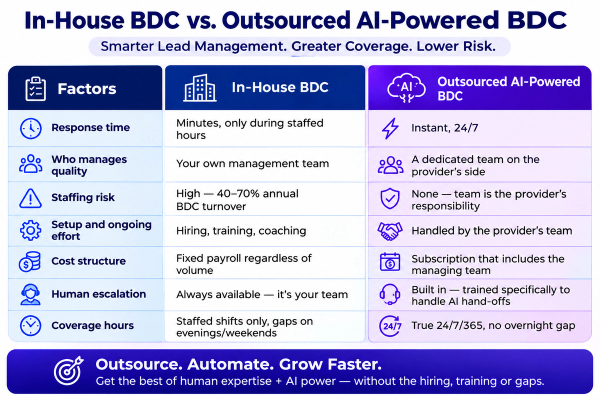
- 24/7 lead responses
- Appointment scheduling
- AI-powered customer conversations
- Facebook Marketplace automation
- Automated lead qualification
Why It Stands Out
One of the biggest challenges dealerships face is delayed lead response. Super Producer helps dealerships respond instantly to inquiries, reducing lost opportunities.
The platform automates repetitive communication tasks while improving customer engagement across channels. This is especially valuable for dealerships generating leads through Facebook Marketplace, where response speed often determines whether a sale happens.
Official Website: https://superproducer.ai/
Types of Software Used by Used Car Dealers
Inventory Management Software
Inventory software helps dealerships manage vehicle stock efficiently.
Core functions include:
- Vehicle tracking
- VIN decoding
- Pricing management
- Aging inventory monitoring
- Marketplace listing synchronization
- Vehicle merchandising
Good inventory software ensures every vehicle is accurately listed across websites and marketplaces. With dealer inventory sitting at approximately 2.1 million units (roughly 42 days' supply) in early 2026, precise inventory management is the difference between turning stock efficiently and watching margins erode on aged units.
Lead Management & CRM Software
CRM systems help dealerships capture, organize, and convert leads.
These tools provide:
- Lead tracking
- Automated follow-ups
- Appointment reminders
- Communication history
- Sales pipeline visibility
- Customer retention tools
The CRM market for auto dealerships is growing fast — from $6.13 billion in 2024 to $6.79 billion in 2025 at a CAGR of 10.8%, on track to reach $9.58 billion by 2029. That growth reflects how central CRM has become to dealership operations. Fast response speed remains the critical variable: research consistently shows that dealers who respond to leads within five minutes convert at dramatically higher rates than those responding within an hour.
Accounting & Finance Software
Automotive accounting software helps dealerships manage financial operations.
These systems handle:
- Expense tracking
- Payroll
- Tax reporting
- Financing calculations
- Profit analysis
- Buy Here Pay Here accounting
Strong accounting visibility helps dealerships remain profitable while scaling operations — especially important given compressed margins from elevated interest rates.
Purchasing & Auction Software
Vehicle sourcing is one of the biggest challenges in the used car business.
Auction and purchasing platforms help dealers:
- Source wholesale vehicles
- Participate in online auctions
- Track trade-ins
- Access inspection reports
- Manage acquisition costs
With wholesale inventory remaining tight — approximately 2.1 million units and 42 days' supply as of early 2026 — sourcing software has moved from a convenience to a competitive necessity. Dealers in high-growth states like Texas, Florida, and North Carolina face particularly competitive sourcing environments.
According to Axios reporting on Cox Automotive data, used vehicle inventory levels remain tight.
Source: https://www.axios.com/2026/04/07/wholesale-used-vehicle-prices
Marketing & AI Automation Tools
AI-powered dealership tools are rapidly transforming automotive marketing.
These platforms help dealers:
- Automate ad campaigns
- Respond to leads instantly
- Generate automotive content
- Schedule appointments automatically
- Improve Facebook Marketplace performance
- Reduce staffing pressure
AI chatbots already handle roughly 30% of initial customer inquiries across the industry — a figure that has grown considerably since 2023. Automation isn't a future-state aspiration for competitive dealerships; it's the current baseline.
Best Inventory Management Software for Used Car Dealers
For a detailed comparison framework, read how to choose the right used car inventory software.
Frazer Dealer Management System
What Frazer Offers
Frazer is one of the most widely used dealer management systems for independent used car dealerships.
Its features include:
- Inventory management
- Vehicle tracking
- Dealer websites
- Buyer's guides
- Reporting tools
- Accounting integration
Frazer is known for being affordable and relatively easy to use for smaller dealerships.
Best For
- Independent used car dealers
- Small-to-medium dealerships
- Dealers needing an all-in-one DMS
Official Website: https://www.frazer.com/
DealerSocket Inventory+
Features
DealerSocket Inventory+ helps dealerships optimize inventory management and pricing strategies.
Features include:
- Inventory tracking
- Pricing optimization
- Vehicle merchandising
- Market analysis tools
- Listing syndication
Why Dealers Use It
The platform helps dealers improve vehicle visibility while pricing inventory competitively based on market conditions.
Official Website: https://www.dealersocket.com/
VinSolutions
Key Features
VinSolutions combines inventory tools with CRM functionality.
Core features include:
- Inventory synchronization
- CRM integration
- Marketing automation
- Lead management
- Reporting dashboards
Benefits
Dealerships use VinSolutions to centralize operations and improve inventory-to-sales workflows.
Official Website: https://www.vinsolutions.com/
Best Lead Management & CRM Software
DealerSocket CRM
CRM Features
DealerSocket CRM is widely used by mid-sized and enterprise dealerships.
Features include:
- Lead tracking
- Sales pipeline management
- Follow-up automation
- Appointment reminders
- Reporting tools
Best For
- Mid-sized dealerships
- Large dealer groups
- Enterprise automotive operations
Official Website: https://www.dealersocket.com/
HubSpot CRM
Features
HubSpot CRM has become increasingly popular among smaller automotive dealerships.
Features include:
- Contact management
- Email automation
- Sales tracking
- Marketing integration
- Workflow automation
Why Smaller Dealers Like It
HubSpot is known for its clean interface and scalability. Smaller dealerships appreciate its ease of use and strong automation capabilities without requiring a large technical team.
Official Website: https://www.hubspot.com/
Best Accounting Software for Used Car Dealers
QuickBooks
Accounting Features
QuickBooks remains one of the most trusted accounting platforms in the United States.
Features include:
- Expense tracking
- Payroll management
- Tax preparation
- Profit reporting
- Invoice management
Why Dealers Use It
Many dealerships choose QuickBooks because it simplifies bookkeeping while integrating with other dealership tools.
Official Website: https://quickbooks.intuit.com/
DealerCenter Accounting
Features
DealerCenter provides automotive-focused accounting and dealership management tools.
Capabilities include:
- Buy Here Pay Here accounting
- Payment tracking
- Deal structuring
- Collections management
- Inventory integration
Benefits
DealerCenter is designed specifically for automotive operations, making it easier for dealerships to manage financing and accounting together.
Official Website: https://www.dealercenter.com/
Best Vehicle Purchasing & Auction Software
Manheim
Auction Platform Features
Manheim is one of the largest wholesale automotive auction platforms in the United States.
Features include:
- Online vehicle auctions
- Wholesale sourcing
- Vehicle history access
- Nationwide inventory
Why Dealers Use It
Dealerships use Manheim to access a large network of vehicles across the country.
Official Website: https://www.manheim.com/
ACV Auctions
Features
ACV Auctions provides digital wholesale vehicle auctions with inspection tools.
Features include:
- Real-time bidding
- Digital auctions
- Vehicle inspections
- Mobile auction access
Benefits
The platform helps dealerships source vehicles faster while improving transparency during the buying process.
Official Website: https://www.acvauctions.com/
AI Tools Changing Used Car Dealerships
AI Is Automating Dealer Operations
Artificial intelligence is becoming one of the biggest competitive differentiators in automotive retail. AI chatbots already handle roughly 30% of initial inquiries across the industry, and buyer appetite for digital convenience continues to grow.
AI tools now help dealerships automate:
- Lead handling
- Customer communication
- Pricing recommendations
- Inventory insights
- Marketing campaigns
According to Cox Automotive research, buyers who used AI-powered shopping assistance reported higher satisfaction during the vehicle buying process.
How AI Improves Sales Efficiency
AI systems improve dealership operations by:
- Responding instantly to leads
- Qualifying prospects automatically
- Reducing repetitive manual work
- Scheduling appointments
- Improving follow-up consistency
Fast lead response is especially important in competitive automotive markets where buyers contact multiple dealerships simultaneously. Dealers using AI engagement tools report measurable improvements in response speed and lead qualification efficiency — both of which correlate directly with higher close rates.
Future of AI in Automotive Retail
Over the next few years, dealerships will increasingly adopt:
- Conversational AI
- Predictive analytics
- AI-powered advertising
- Automated customer journeys
- Smart pricing systems
The CRM software market for automotive dealerships is projected to reach $9.58 billion by 2029 — a direct signal of where the industry is investing. AI is shifting from a differentiator to a core dealership requirement, and the window for gaining a competitive advantage through early adoption is narrowing.
How to Choose the Right Dealership Software
Consider Your Dealership Size
Different dealerships require different software solutions. Independent dealers often prioritize affordability and ease of use, while large dealership groups need enterprise-level integrations and reporting. With 151,000 used car dealer businesses in the U.S. spanning a wide range of sizes and structures, there is no one-size-fits-all stack — but the integration requirements apply across the board.
Look for Integration Capabilities
The best dealership software integrates with:
- CRM systems
- DMS platforms
- Facebook Marketplace
- Accounting software
- Marketing automation tools
Disconnected tools create operational inefficiencies and data silos. The dealers winning in competitive markets — particularly in high-growth states like Texas, Florida, and North Carolina — are running integrated stacks, not disconnected point solutions.
Prioritize Automation
Automation helps dealerships:
- Save time
- Reduce staffing pressure
- Improve consistency
- Increase lead response speed
- Deliver better customer experiences
Dealerships using automation effectively can often outperform competitors without increasing staff size. With 76% of new-vehicle buyers reporting high satisfaction in 2025, the gap between digitally capable and manual operations is becoming impossible to ignore.
Compare Pricing & Scalability
Before choosing software, dealerships should evaluate:
- Monthly subscription costs
- User-based pricing
- Setup fees
- Scalability
- Customer support quality
The cheapest software is not always the best long-term investment. When evaluating options, weigh the cost of a tool against the revenue impact of missed leads, slower response times, and inventory errors.
Common Mistakes Dealers Make When Choosing Software
Choosing Too Many Separate Tools
Using disconnected platforms creates confusion and operational inefficiencies. Dealerships should focus on building an integrated software ecosystem instead of managing dozens of unrelated tools.
Ignoring Mobile Accessibility
Modern sales teams need mobile-friendly systems to manage leads, communicate with customers, and access inventory from anywhere.
Not Training Staff Properly
Even the best software fails if employees are not properly trained. Poor adoption leads to reduced ROI and inconsistent processes — a common reason why dealerships see initial technology investments underperform.
Choosing Cheap Software Over Reliable Systems
Low-cost platforms often lack:
- Reliable customer support
- Scalability
- Advanced automation
- Proper integrations
Dealerships should prioritize long-term operational value rather than short-term savings.
Conclusion
Used car dealerships in 2026 operate in a highly digital and competitive environment. The U.S. used car market is approaching $871 billion in value, buyer expectations have never been higher, and independent dealers face growing pressure from organized dealer groups expanding at nearly 8% annually.
Modern dealership software helps automotive businesses streamline inventory management, automate lead follow-ups, improve accounting accuracy, and increase sales efficiency. The data is clear: 85% of dealerships already use CRM software, 95% use inventory management systems, and AI-assisted interactions are becoming the norm. The question is no longer whether to invest in software — it's whether your current stack is integrated, automated, and built to scale.
Inventory systems, CRM platforms, accounting tools, auction software, and AI-powered automation tools now work together to form a connected dealership technology stack. Dealerships that automate communication and respond instantly to leads are improving customer satisfaction while increasing conversions.
As the U.S. automotive industry continues evolving, dealerships that invest in scalable, integrated software systems will be best positioned for long-term growth and profitability.

Manan Bhalodia
Expert in automotive AI solutions and customer service optimization. Passionate about helping automotive dealerships leverage technology for growth.